
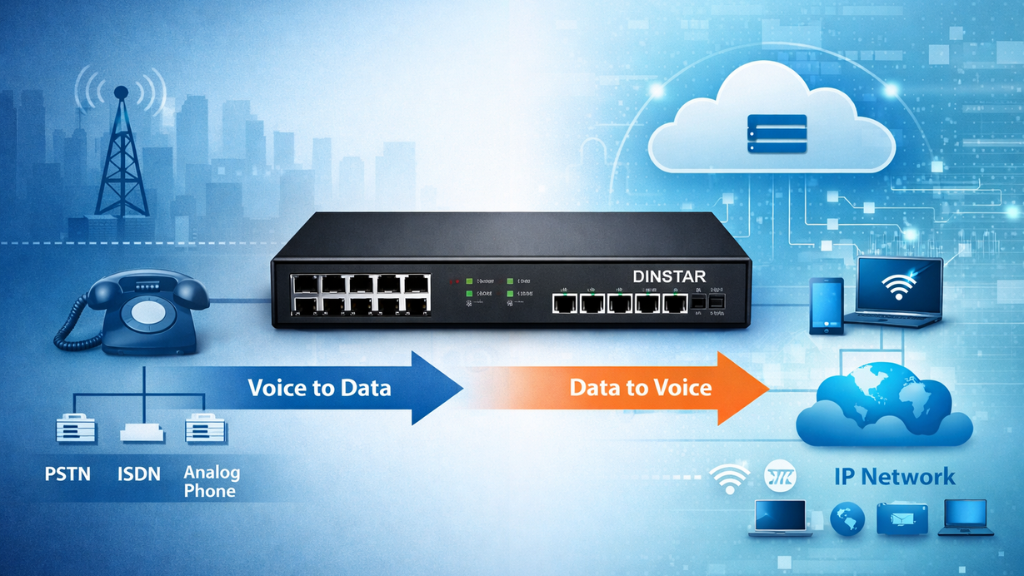
Companies are now required to have fast, reliable voice communications to remain competitive. It is here where the VoIP gateway comes in. When you are wondering about the meaning of a VoIP gateway and how it operates, the answer is simple: it bridges the gap between traditional telephone networks and the internet for making calls.
The businesses that abandon old-fashioned phone technology and switch to online communication must know how to integrate a VoIP gateway and understand the technology that underlies it.
With rising demand for scalable, cost-efficient calling, VoIP gateways like Dinstar VoIP Gateways in Dubai play a critical role in ensuring seamless voice transmission without disrupting existing systems.
About VoIP Gateway Technology
A VoIP gateway is a device that converts voice signals so they can work across traditional telephony networks (PSTN, analog, ISDN) and IP-based networks. Put simply, it lets regular phone calls go through the internet and vice versa.
This technology lets companies keep using their existing phone infrastructure while upgrading to VoIP-based communication. The gateway turns voice into data packages and then back into voice, keeping everything connected, clear, and working across different communication tools.
How a VoIP Gateway Works in Business Communication
VoIP gateway performs three main tasks: protocol conversion, data, and call routing. Exploring the process of VoIP Gateway allows businesses to deploy the right solution for their communication needs:
1. Signal Conversion Between Analog and IP Networks
Traditional phone systems use analog signals, whereas VoIP uses digital signals. A VoIP gateway converts analog signals into digital packets that travel over the Internet. Incoming VoIP calls are converted back into analog signals, ensuring smooth two-way communication without call quality loss.
2. Call Routing and Traffic Management
After changing the signal format, the VoIP gateway routes calls according to rules you set up in advance. This includes directing calls to SIP trunks, internal users, or external lines. Proper routing reduces call drops, improves response times, and optimises bandwidth usage, which is really handy when you have a myriad of calls in the line at the same time.
3. Voice Compression and Quality Control
VoIP gateways use codecs to compress voice data, ensuring minimal bandwidth consumption while maintaining clarity. Advanced gateways manage jitter, lost packets, and delays, ensuring consistent call quality. Businesses that rely on phone calls for customer assistance, to seal deals, or to coordinate team activities cannot afford poor quality.
4. Security and Network Protection
Enterprise-grade VoIP gateways include encryption, firewall compatibility, and authentication protocols. Such safeguards protect voice data from interception and unauthorized access. Secure gateways ensure your business calls remain confidential and comply with your company’s IT and telecom security policies.
5. Integration with Existing Systems
One big benefit of VoIP gateways is that they integrate with PBX systems, CRM software, and cloud communication tools. Companies can modernize their communication setup without replacing all existing hardware.
How to Connect a VoIP Gateway Correctly
Setting up a VoIP gateway requires some planning to avoid call problems or system crashes. Here’s the usual process companies follow to correctly connect the VoIP Gateway.
1. Network Assessment and Bandwidth Planning
First, check whether your network supports it. You require a sufficient bandwidth, low delays and a stable internet connection. Your network should be configured in such a way that voice calls will have precedence over standard data traffic.
2. Physical and Logical Setup
Connect the gateway to both your traditional phone gear and your internet network. You’ll need to plug in IP addresses, SIP login details, and routing instructions. Companies that work with skilled providers like The Node IT ensure this setup is optimized for performance and reliability..
3. SIP Trunk and PBX Configuration
SIP trunks are configured to allow. Adjust your PBX settings to match what the gateway is saying to ensure everything communicates. This part controls how calls move between people in your office and the outside world.
4. Testing and Quality Validation
After hooking everything up, make test calls to check sound quality, timing, and backup systems. Good testing ensures there is no shock when you put it into the system.
What Equipment Do You Need to Use a VoIP Gateway?
To install a VoIP gateway, it require the correct hardware and network components. Picking quality gear keeps everything running without hiccups.
1. VoIP Gateway Device
The gateway box is what makes it all happen. Select one based on the number of ports, call capacity, and supported protocols. Businesses choose gateways based on scalability and long-term communication needs.
2. Internet Connection and Router
You must have a reliable broadband connection or a dedicated internet line. Business-class routers with quality of service features prioritise voice traffic, so your calls don’t suffer when someone’s streaming video.
3. PBX or IP-PBX System
A PBX system routes calls within your organization. VoIP gateways work with older PBX boxes and newer IP-PBX systems, giving you options for how you set things up.
4. SIP Trunking Service
SIP trunks replace traditional-style phone lines and enable VoIP calling. They hook the gateway to outside networks so you can make cheap calls anywhere in the country or around the world.
5. Power Backup and Redundancy
Battery backup (UPS) continued operation during outages. Backup planning reduces downtime and ensures your business does not stop.
Conclusion
A VoIP gateway isn’t just another piece of equipment; it’s a smart investment for how businesses communicate today. From changing signals to routing calls securely, it creates a smooth connection between traditional phone systems and internet-based calling.
Knowing how to connect a VoIP gateway and which equipment to use with it puts companies in a position to make smart choices that work now and later.
Organizations hunting for solid Dinstar VoIP Gateways In Dubai can turn to The Node IT for expert advice, installation, and ongoing help designed around business communication requirements. With a focus on performance, security, and room to grow, The Node IT guides companies through voice infrastructure upgrades with confidence and skill.